

Outdoor air conditioning unit mounting in London

Outdoor air conditioning condensers mounted on strong wall brackets or floor feet, with clear airflow, low vibration and a tidy finish for your neighbours.

Step 3 of 6 Air conditioning

A secure outdoor unit that stays quiet and works efficiently

The outdoor air conditioning unit, the condenser, does the heavy lifting. It moves heat from your room to the outside, so it needs a firm mounting, plenty of clear space around it and a position that keeps noise away from bedrooms and neighbouring windows.

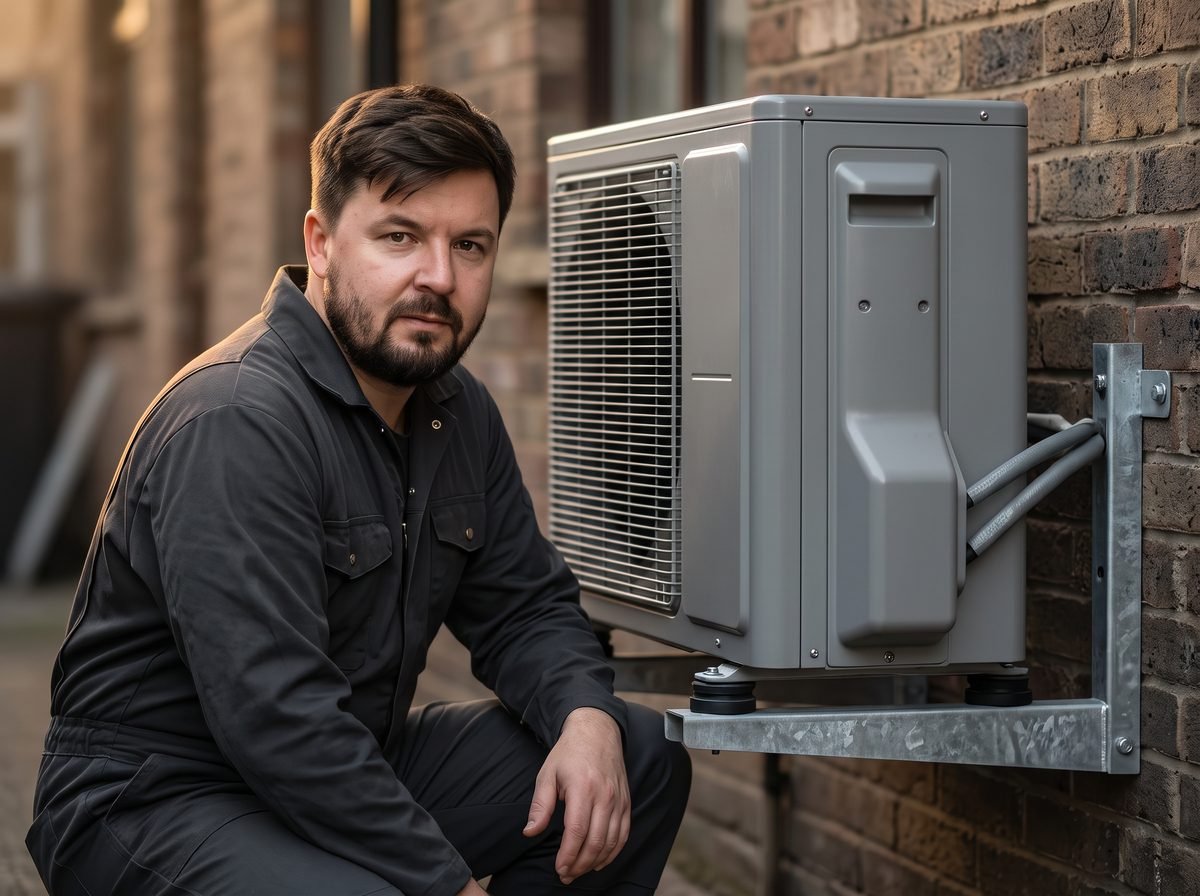
We mount outdoor units on galvanised wall brackets or on floor feet on a solid base, with rubber anti-vibration pads so the hum does not travel into the building. The unit is levelled, fixed down and ready for the pipework and drainage before we move on.

Plumbery engineer beside an outdoor air conditioning unit on a galvanised wall bracket with anti-vibration mounts

What we do at this stage

The outdoor unit is fixed to last, not just to get the system running.

Bracket or floor stand

Steel wall brackets rated for the unit's weight, or feet on a level concrete or paving base.

Fixings into sound masonry

Heavy-duty fixings into brick or block, never into loose render or weak mortar.

Anti-vibration mounts

Rubber pads under the unit reduce hum and stop vibration passing into the wall.

Clearance and airflow

The space around the unit that the maker specifies, so air flows in and out freely.

Access for servicing

Room to reach the panels and pipe connections for future servicing.

Drain and weather protection

Condensate drain placed away from paths, and pipe entries sealed against rain.

How the visit runs

We mark and fix

Bracket positions are marked, levelled and fixed into the wall with suitable anchors.

We lift and secure

The condenser is lifted onto the bracket, bolted down and set on its anti-vibration pads.

We connect and check

Pipes, cable and drain are connected, then the unit is checked for level and stability.

Choosing the right position for an outdoor unit

Outdoor units need free air. Placing one in a tight recess, behind a fence or close under a balcony can make the warm air recirculate, which lowers performance and raises running cost. The manufacturer’s manual sets minimum gaps at the back, sides and front of the unit, and we follow them.

Noise matters too. Keep the unit away from bedroom windows, yours and your neighbours’, and avoid mounting it on a thin partition wall that carries vibration into the room. Where a wall bracket is not suitable, a ground-standing unit on a concrete base or paving slab is often the quieter choice. Wall brackets are common on London terraces, in light wells and on rear extensions where there is little ground space.

Rules vary by property. Flats and leasehold homes may need consent from the freeholder for a balcony, roof or wall position, and conservation areas or listed buildings can restrict what goes on the outside. We raise these at the survey.

Frequently asked questions

Can an outdoor air conditioning unit go on a wall in London?

Yes, if the wall is solid enough and the unit is fixed with rated brackets. Your engineer checks the masonry at the survey and recommends a bracket or a ground stand accordingly.

How close can an outdoor unit be to a neighbour's window?

There is no single distance, because it depends on the unit's noise level and the layout. We place it as far from bedroom windows as the pipe route allows and use anti-vibration mounts to keep noise down.

Does the outdoor unit need servicing access?

Yes. We leave space to reach the panels and pipe connections so the yearly service is straightforward.

Do I need permission for an outdoor unit?

Requirements vary. Flats, leasehold properties, conservation areas and listed buildings can need consent, so check with your freeholder or local planning authority. We point out anything to raise when we survey.

Book your outdoor unit installation

Know the price before we start

Every service on this site has a published rate by time band. Check what your job costs, then book the slot that suits you. You can also return to the air conditioning overview or browse all our services.

Published rates

Air conditioning hourly rates in London

You pay a first-hour rate, then a lower rate for each extra half hour. The rate depends on the day and time of the visit.

Air conditioningMon–Fri 8am–6pmMon–Fri 6pm–10pmSaturday 8am–6pmSunday 8am–6pm
First hour£85£88£88£98
Each extra half hour£42£45£50£52
Daily rate£495———

Rates apply to jobs inside the M25. Minimum charges apply. Materials are charged in addition to labour, and shopping time for materials is charged at £35 per hour. See the full rate card.

Why Plumbery

Qualified, insured and upfront about price

Every engineer we send is registered or qualified for the trade they work in, and you can check the details before anyone starts.

  • Gas Safe registeredGas and heating work is done by Gas Safe registered engineers.
  • NICEIC qualifiedElectrical work is done by NICEIC-qualified electricians.
  • F-Gas certifiedAir conditioning work is done by F-Gas certified engineers.
  • Fully insuredEvery job is covered by our insurance.
  • Rates published in advanceOur hourly rates are on the pricing page. Nothing starts until you agree the rate.
  • Paperwork includedGas safety certificates and electrical records are provided on completion.
  • Registered companyPlumbery Ltd, company no. 11677583, registered in England and Wales.