


Electricians in London for Rewiring, Fuse Boards and Lighting















Choosing an electrician
How to choose an electrician in London
Anyone can call themselves an electrician, so it pays to ask a few questions before you book. In England, all domestic electrical work must meet Part P of the Building Regulations, and notifiable work must either be carried out by an installer registered with a competent person scheme or be notified to and inspected by Building Control. Ask which scheme the electrician belongs to, whether they will issue the right certificate, and whether they carry public liability insurance. You can check scheme membership online before the visit.
If you are searching for an electrician near you in London, confirm the firm covers your borough and the hours you need. A good electrician also explains the job in plain terms. Expect them to test the existing installation before quoting for anything bigger than a socket, to say what is a safety issue and what is optional, and to put the price in writing. For an urgent fault, our emergency electrician service is there as well.
Common jobs
What London homes and businesses usually call an electrician for
Consumer unit upgrades
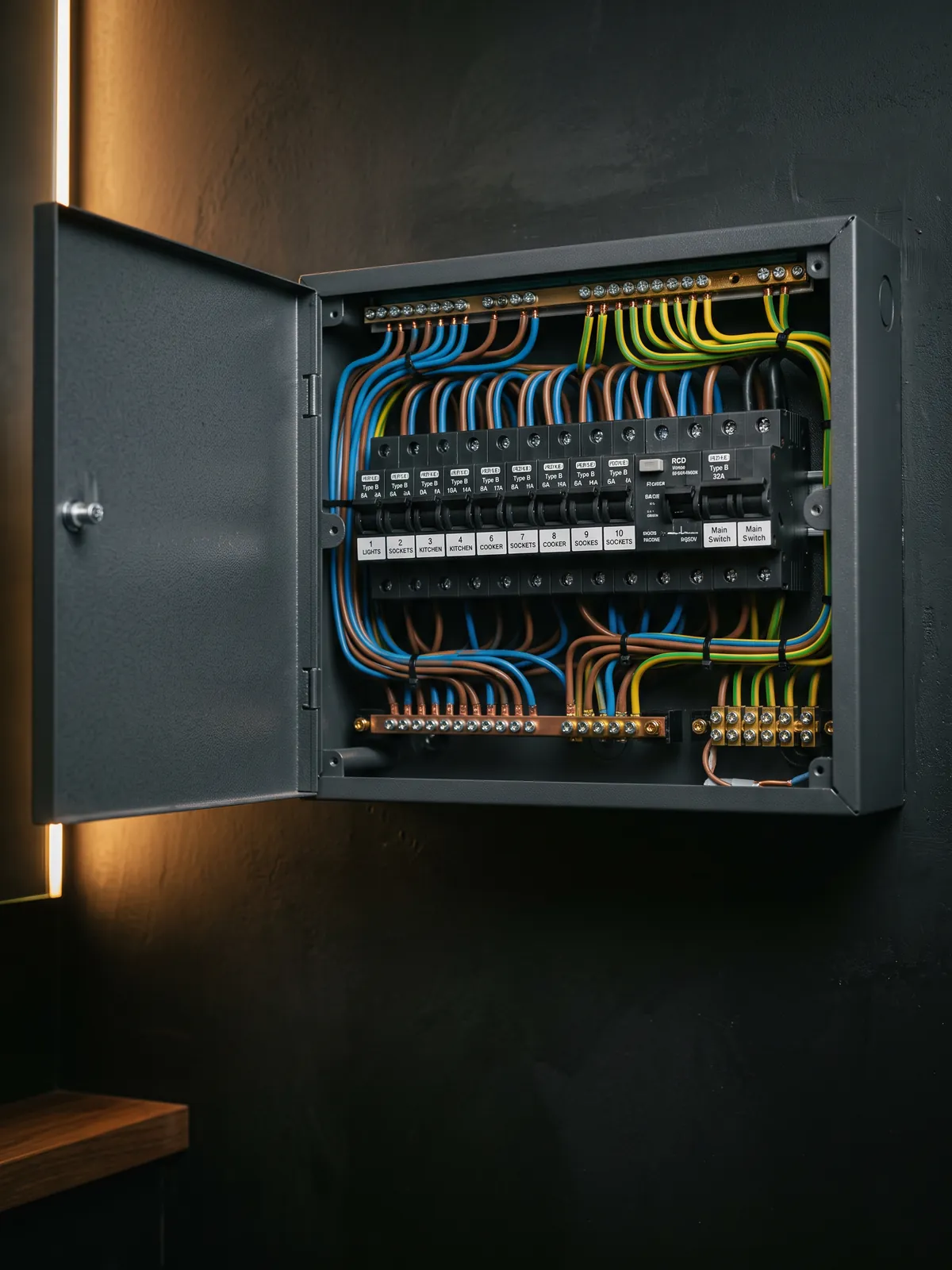
Old fuse boxes with rewireable fuses or no RCD protection are swapped for a modern board with proper circuit protection.
Rewiring and new circuits
Whole-house rewires, kitchen and loft circuits, EV charger supplies and extra sockets in flats and houses.
Fault finding
Tripping breakers, dead sockets, flickering lights, burning smells and circuits that keep failing.
Landlord safety checks
Periodic inspection reports for rented homes, with remedial work done afterwards so the report can be satisfactory.
Lighting and outdoor power
Spotlights, dimmers, security lights, garden lighting and outdoor sockets, all on correctly protected circuits.
Part P explained
What Part P means for your electrical work
Part P is the section of the Building Regulations covering electrical safety in homes in England. Notifiable work includes installing a new circuit, replacing a consumer unit (see fuse boxes replacement) and any addition or alteration to an existing circuit in a special location, such as within the zones of a room with a bath or shower. Elsewhere, like-for-like repairs, replacing a socket or light fitting and adding a spur to an existing circuit usually do not need notifying, but they must still be safe and to standard.
Notification is done by a registered installer through their competent person scheme, by a registered third-party certifier, or by the homeowner applying to Building Control (the council or a registered building control approver) before the work starts, which carries a fee and an inspection. Unnotified work can cause trouble when you sell, because a solicitor will ask for certificates. Keep every certificate you are given, as insurers and buyers may also want to see them.
How a visit works
From first call to certificate
Describe the job
Tell us what is wrong or what you want fitted, and send photos of your consumer unit if you can.
Survey and testing
The electrician looks at the existing installation and carries out tests so hidden problems come out before work starts.
Written estimate
You get the scope and price in writing, with anything optional clearly separated.
Safe isolation and work
Power is isolated and proved dead before work begins, and we agree which circuits will be off and for how long.
Testing and certification
New or altered circuits are tested to BS 7671 and the results recorded on the correct certificate.
Handover
We explain what was done, label circuits and give you the paperwork.
Certificates explained
EIC, Minor Works certificate and EICR: which one do you need?
These three documents are often confused. An Electrical Installation Certificate (EIC) is issued for new installations, new circuits or a replacement consumer unit. A Minor Electrical Installation Works Certificate covers smaller additions or alterations that do not involve a new circuit, such as moving a socket. Both are issued by the person who did the work, after inspection and testing, and both should be kept with your property papers.
An Electrical Installation Condition Report (EICR) is different: it is a periodic inspection of an existing installation, not a certificate for new work. It records the condition of the wiring and fittings and grades any observations by urgency. It is what a landlord or buyer typically asks for, and it is the document most affected by the rented-sector rules below.
Landlord duties
Landlords: EICR rules for rented homes in England
Under the Electrical Safety Standards in the Private Rented Sector and Social Rented Sector (England) Regulations 2020, landlords must have the fixed electrical installation inspected and tested by a qualified person at least every five years, or sooner if the previous report says so. A copy must go to existing tenants within 28 days, to new tenants before they move in, and to the local authority within 7 days if it asks.
If the report records urgent (C1), potentially dangerous (C2) or further investigation (FI) items, the landlord must have the remedial work or investigation completed within 28 days, or any shorter period stated in the report, and send written confirmation to the tenant and council. Penalties for breaching the rules can be substantial. To discuss a rented property, contact us and we can look at the inspection and any repairs together.
Warning signs
Signs your wiring or fuse board needs attention
- Fuses that blow or breakers that trip repeatedly
- Warm, discoloured or crackling sockets and switches
- A burning or fishy smell near sockets or the consumer unit
- Lights that flicker or dim when appliances start
- Rubber, fabric or lead-sheathed cables in older properties
- Round-pin sockets or too few sockets, leading to extension leads
- Mild shocks from metal fittings or appliances
- A fuse board with a wooden or cracked plastic cover

Rewiring
Rewiring a London flat or house: what to expect
A full rewire replaces the cables, accessories and usually the consumer unit. It is most often needed in homes with original wiring from before the 1960s or where an inspection report finds the cables deteriorated. Work is usually done in stages, with floorboards lifted and channels cut in walls, so a vacant property is easiest. Occupied homes can be done room by room, though expect disruption and dust sheets. Our rewiring and installations page has more detail.
Rewiring is often combined with a kitchen, bathroom or loft project, when walls are open anyway. Plan sockets, lighting and any charging point before plastering, because sorting the layout early saves cutting walls twice. Redecoration afterwards is normally separate. Leasehold flats may need freeholder or managing agent consent, especially for work affecting shared risers or communal supplies.
Fault finding
Common electrical faults and what usually causes them
Tripping RCD
Often caused by a damaged cable, moisture or a failing appliance; the circuit needs testing rather than repeated resetting.
Dead sockets
A loose connection, a failed fuse or a broken ring circuit can leave sockets without power.
Flickering lights
Usually a loose connection, a faulty dimmer or incompatible bulbs; sometimes a supply issue.
Hot accessories
Heat at a socket or plug points to loose terminals or overload and should be treated as urgent.
Power cut in one area
If your neighbours are also off, call your distribution network operator; if only you are off, check your consumer unit.
Fault finding
Why fault finding needs testing, not guessing
Repeatedly resetting a trip or replacing fuses hides the cause. A qualified electrician uses an insulation resistance tester and other instruments to trace which circuit or appliance is at fault, which is quicker and safer than swapping parts. Our electrical fault finding service follows that approach, and for urgent problems there is the emergency electrician route.
If you smell burning, see scorching or hear buzzing from the board, switch off the main switch if it is safe to do so, keep people away and call for help. If there is fire or risk to life, call 999 first. Do not keep using a socket that feels hot to the touch, and do not open the consumer unit cover yourself.
Cost factors
What affects the price of electrical work in London
Electrical costs depend on the size of the job, the age and condition of the existing wiring, access to cables, the number of circuits, the parts specified and parking or access restrictions in central London. Hidden problems found during testing, such as missing earthing or old cable, can change the scope, which is why a survey comes before a firm quote on larger work.
You will find our published rates on the pricing page, and larger jobs get a written estimate after a visit. To arrange one, book a visit and tell us what you need. Comparing quotes is fairer when each states the same scope: certificates included, making good, testing, and whether the consumer unit is part of the price.
Everyday safety
Simple electrical safety habits for your home
Test your RCD with its test button a few times a year, avoid daisy-chaining extension leads and keep water away from sockets and plugs. Do not overload sockets with high-power appliances, and replace damaged flexes rather than taping them. Smoke alarms should be tested monthly. These habits do not replace a periodic inspection, but they catch many common risks early.
Outdoors, use only equipment rated for outside use and have outdoor sockets protected by an RCD. If you are planning garden lighting or security lights, leave the connection to a competent electrician. Cables run through gardens need suitable protection and depth, and buried cables must not sit where a spade might find them.
Questions
Electrical services in London: your questions
How do I choose an electrician in London?
Ask whether they are registered with a Part P competent person scheme, whether they carry public liability insurance and which certificate you will receive. You can check scheme membership online. Get a written estimate stating the scope, testing and paperwork, and be cautious of anyone who will not put a price or certificates in writing.
Do landlords in London need an electrical safety report?
Yes. In England, private landlords (and now social landlords too) must have the fixed wiring inspected and tested at least every five years and give tenants a copy of the report within 28 days. If it lists C1, C2 or FI items, remedial work or further investigation must be completed within 28 days, or sooner if the report says so.
How often should my home's wiring be tested?
Industry guidance suggests an inspection at least every ten years for an owner-occupied home and every five years for rented property, and also when you buy a home. Test sooner if you notice warning signs such as tripping, hot sockets or older rubber-covered wiring.
What is the difference between an EIC and an EICR?
An Electrical Installation Certificate is issued after new work, such as a new circuit or consumer unit, to confirm it was designed, built and tested to BS 7671. An EICR is a periodic report on the condition of an existing installation, grading any defects. One covers new work, the other reviews old.
Does electrical work need Part P notification?
In a home in England, notifiable work includes new circuits and consumer unit replacements. It must be done by a registered competent person, who notifies Building Control through their scheme, or be inspected by the council. Like-for-like repairs and minor additions to existing circuits are usually not notifiable, except in a room with a bath or shower, but must still meet BS 7671.
Why does my electricity keep tripping?
A trip means a protective device has detected an overload, an earth leakage or a fault. Common causes are a faulty appliance, damp, a damaged cable or a failing device. Unplug everything and reset once; if it trips again, stop resetting and have the circuit tested by an electrician.
What affects how much an electrician costs in London?
The scope of work, the age and condition of the wiring, access to cables, parts chosen, certification, and parking or access in central London all affect the price. Hidden faults found during testing can add work. A survey and written estimate give a clearer figure for larger jobs.
Need help today?
Urgent repairs in London
Call-outs seven days a week at the published hourly rate. These pages explain what to do first and what the visit costs.

Published rates
Electrical hourly rates in London
You pay a first-hour rate, then a lower rate for each extra half hour. The rate depends on the day and time of the visit.
| Electrical | Mon–Fri 8am–6pm | Mon–Fri 6pm–10pm | Saturday 8am–6pm | Sunday 8am–6pm |
|---|---|---|---|---|
| First hour | £94.80Business: £79 + VAT | £102Business: £85 + VAT | £102Business: £85 + VAT | £111.60Business: £93 + VAT |
| Each extra half hour | £54Business: £45 + VAT | £56.40Business: £47 + VAT | £56.40Business: £47 + VAT | £56.40Business: £47 + VAT |
| Daily rate | £588Business: £490 + VAT | — | — | — |
Prices include VAT at 20%. Offices and companies: the business rate is shown + VAT. Rates apply to jobs inside the M25. Minimum charges apply. Materials are charged in addition to labour. See the full rate card.
Extra If we need to go and buy materials, travel and shopping time is charged at £57.60 per hour inc VAT (business: £48 + VAT). The materials themselves are added at cost.
Plumbers, gas engineers and electricians in every London borough
We attend jobs in all 32 London boroughs and the City of London, and anywhere inside the M25. If you are unsure whether we cover your postcode, call 07353 373753.
- Barking and Dagenham
- Barnet
- Bexley
- Brent
- Bromley
- Camden
- City of London
- Croydon
- Ealing
- Enfield
- Greenwich
- Hackney
- Hammersmith and Fulham
- Haringey
- Harrow
- Havering
- Hillingdon
- Hounslow
- Islington
- Kensington and Chelsea
- Kingston upon Thames
- Lambeth
- Lewisham
- Merton
- Newham
- Redbridge
- Richmond upon Thames
- Southwark
- Sutton
- Tower Hamlets
- Waltham Forest
- Wandsworth
- Westminster
Why Plumbery
Qualified, insured and upfront about price
Every engineer we send is registered or qualified for the trade they work in, and you can check the details before anyone starts.
- Fully insuredEvery job is covered by our insurance.
- Rates published in advanceOur hourly rates are on the pricing page. Nothing starts until you agree the rate.
- Paperwork includedGas safety certificates and electrical records are provided on completion.
- Registered companyPlumbery Ltd, company no. 11677583, registered in England and Wales.
Our electrical services in London
- General electrical installations and rewiring
- Fuse boxes replacement
- Electrical faults finding
- Switches, sockets and transformers installation
- Dimmer switches and modules replacement
- Doorbell installation and repair
- Lighting fixture installation
- Light fixture repair & replacement
- Preparing new lighting points
- Investigate and repair lighting faults
- Outdoor and garden lights
- Security lights fitting
- All Plumbery services
 Light fixture repair & replacement