


Gas, boiler and heating work for London homes









Choosing an engineer
Choosing a gas engineer in London
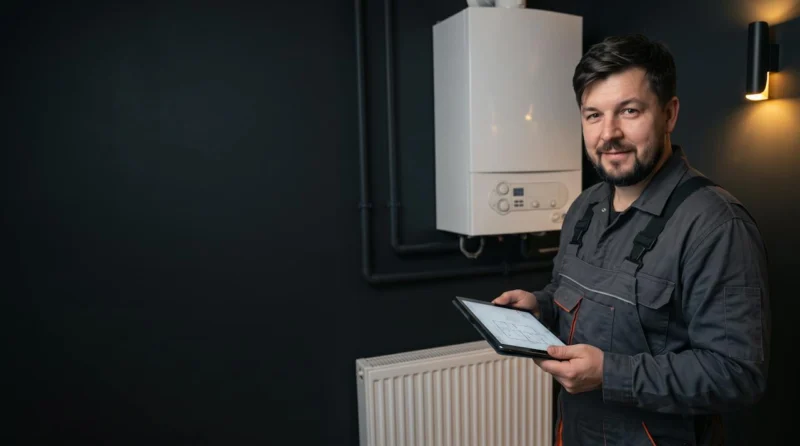
By law, anyone working on gas appliances in Great Britain must be on the Gas Safe Register. You can check any gas engineer on the Gas Safe Register website using their licence number, and the engineer should show you their ID card, which lists the types of gas work they are qualified for. Ask for it every time, because the cheapest quote is no bargain if the work is unsafe or illegal.
A good heating engineer asks about your home, your hot water use and any past faults before suggesting a repair, a boiler service or replacement or a power flush. Expect a clear explanation of the cause, written details of what is proposed, and advice on safe use afterwards. Cost depends on the fault and the parts, so see our pricing page for how it is worked out.
Gas emergency
What to do if you smell gas
- Open doors and windows to let fresh air in.
- Do not operate light switches, doorbells or electrical appliances, and never use a naked flame or smoke.
- If it is safe to reach, turn the gas off at the meter.
- Call the free National Gas Emergency number on 0800 111 999, which is open 24 hours a day.
- Leave the property and wait outside if the smell is strong or you feel unwell.
- Do not use the gas again until a Gas Safe registered engineer has checked it.

Warning signs
Signs your boiler or heating needs attention
Yellow or orange flame
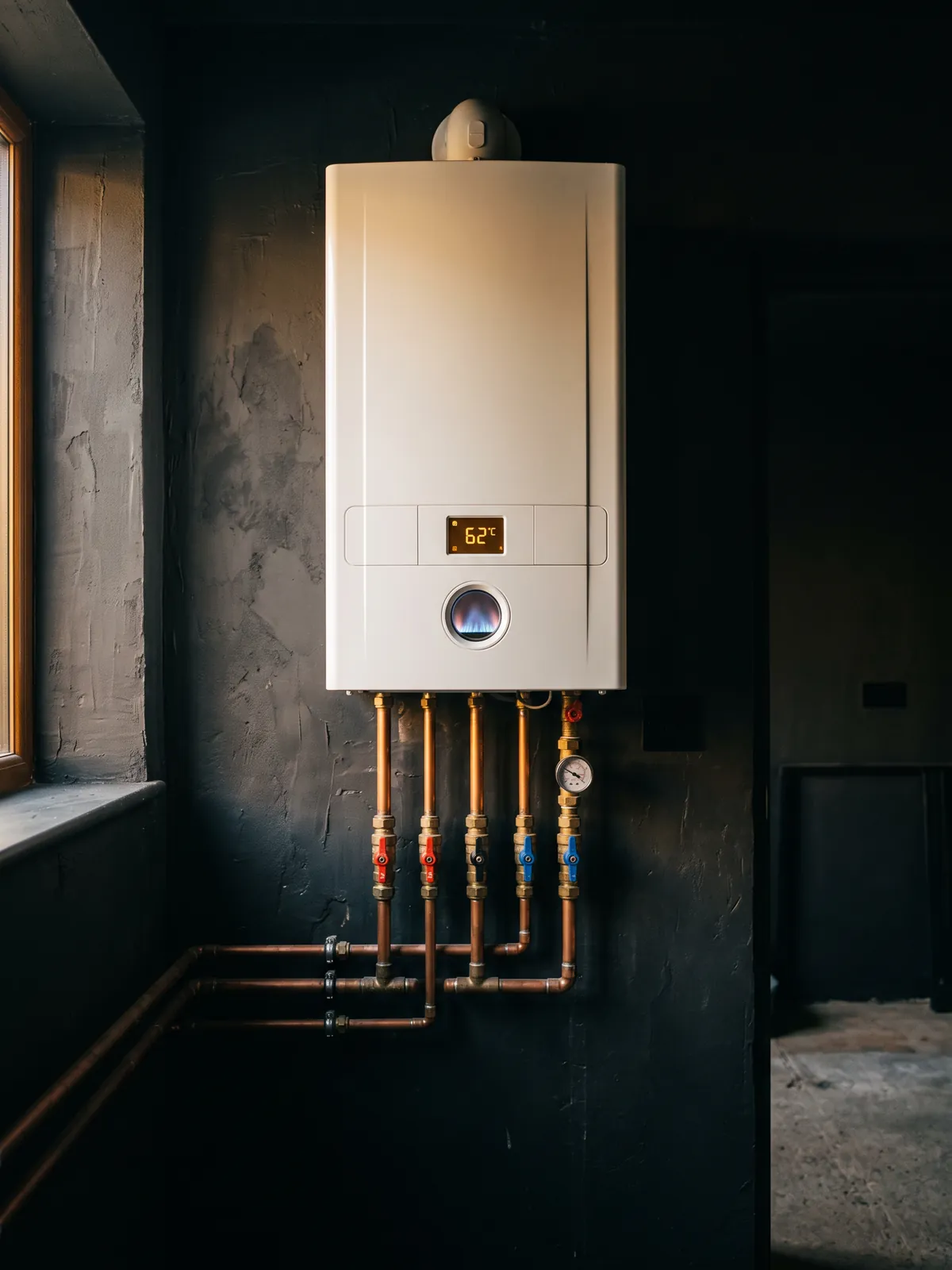
A healthy gas flame burns crisp blue. A lazy yellow or orange flame, or black soot marks around the appliance, can signal poor combustion and should be checked.
Falling pressure
If the gauge drops often and you have to top up the system, there may be a leak, a faulty valve or a failing expansion vessel.
Banging or kettling
Loud noises from the boiler often point to scale or sludge restricting water flow through the heat exchanger.
Cold patches on radiators
Cold spots at the bottom or top suggest sludge or trapped air, while a fully cold radiator can mean a stuck valve.
Rented homes and safety
Landlord gas safety checks and carbon monoxide alarms
Landlords in England must have every gas appliance and flue they provide checked at least every 12 months by a Gas Safe registered engineer, and give tenants a copy of the record within 28 days, or before new tenants move in. Our gas safety certificate page explains what the check covers. Landlords must also fit a carbon monoxide alarm in any room used as living accommodation, including bathrooms, that has a fixed combustion appliance, apart from gas cookers, and a smoke alarm on every storey used as living accommodation.
Carbon monoxide has no smell or colour, so everyone with a gas boiler, owner or tenant, should have a working alarm and test it regularly. Headaches, dizziness and nausea that ease when you leave the building are warning signs, and the alarm sounding means you should open windows, leave and call the National Gas Emergency number.
Questions
Gas, boiler and heating in London: your questions
How do I check that a gas engineer is registered?
Search the Gas Safe Register website with the engineer's licence number, or ask to see their Gas Safe ID card. The card shows their photograph, licence number and the gas work they are qualified to do. If the details do not match, do not allow them to work on your appliances.
How often should a boiler be serviced?
Manufacturers generally recommend a service every 12 months, and keeping the service record can be a condition of the warranty. A yearly check helps spot faults early, keeps the boiler running efficiently and is a good time to review safety, flues and pressure.
Is a landlord gas safety certificate a legal requirement?
Yes. In England, landlords must arrange a gas safety check on each appliance and flue every 12 months and give tenants a copy of the landlord gas safety record (often called a CP12). Tenants should get it within 28 days of the check, or before they move in if they are new.
Do I need a carbon monoxide alarm?
Landlords must fit one in every room used as living accommodation that has a fixed combustion appliance, apart from gas cookers, must check it works on the day each new tenancy starts, and must repair or replace it as soon as reasonably practicable once told it is faulty. Owner-occupiers are strongly advised to fit one too. Choose an alarm marked BS EN 50291.
What should I do if my boiler is leaking?
Turn off the boiler, and switch off the water supply to it if you can. Do not open the casing. A leak can come from a failed seal, a pump or a pressure relief valve, so a Gas Safe registered engineer should inspect it before you use it again.
Why is my boiler losing pressure?
Common causes are a small leak on the system, a faulty pressure relief valve or an expansion vessel that has lost its charge. Repeated topping up is not a fix, because it adds fresh water and can speed up corrosion. Have the system checked to find the cause.
What is a power flush and does my system need one?
A power flush circulates water at high flow through the radiators to remove sludge and rust. It can help if radiators have cold patches, the system is noisy or the boiler overheats. It is not suitable for every system, so an engineer should assess it first.
Can I move a boiler or change it to a different type?
Often yes, but it depends on the flue route, ventilation, gas and water supply and Building Regulations. A different position or switching from a regular to a combi boiler involves pipework changes. An engineer can survey the property and advise before any work is agreed.
Need help today?
Urgent repairs in London
Call-outs seven days a week at the published hourly rate. These pages explain what to do first and what the visit costs.

Published rates
Gas and boiler hourly rates in London
You pay a first-hour rate, then a lower rate for each extra half hour. The rate depends on the day and time of the visit.
| Gas and boiler | Mon–Fri 8am–6pm | Mon–Fri 6pm–10pm | Saturday 8am–6pm | Sunday 8am–6pm |
|---|---|---|---|---|
| First hour | £102Business: £85 + VAT | £105.60Business: £88 + VAT | £105.60Business: £88 + VAT | £117.60Business: £98 + VAT |
| Each extra half hour | £50.40Business: £42 + VAT | £54Business: £45 + VAT | £60Business: £50 + VAT | £62.40Business: £52 + VAT |
| Daily rate | £594Business: £495 + VAT | — | — | — |
Prices include VAT at 20%. Offices and companies: the business rate is shown + VAT. Rates apply to jobs inside the M25. Minimum charges apply. Materials are charged in addition to labour. See the full rate card.
Extra If we need to go and buy materials, travel and shopping time is charged at £57.60 per hour inc VAT (business: £48 + VAT). The materials themselves are added at cost.
Plumbers, gas engineers and electricians in every London borough
We attend jobs in all 32 London boroughs and the City of London, and anywhere inside the M25. If you are unsure whether we cover your postcode, call 07353 373753.
- Barking and Dagenham
- Barnet
- Bexley
- Brent
- Bromley
- Camden
- City of London
- Croydon
- Ealing
- Enfield
- Greenwich
- Hackney
- Hammersmith and Fulham
- Haringey
- Harrow
- Havering
- Hillingdon
- Hounslow
- Islington
- Kensington and Chelsea
- Kingston upon Thames
- Lambeth
- Lewisham
- Merton
- Newham
- Redbridge
- Richmond upon Thames
- Southwark
- Sutton
- Tower Hamlets
- Waltham Forest
- Wandsworth
- Westminster
Why Plumbery
Qualified, insured and upfront about price
Every engineer we send is registered or qualified for the trade they work in, and you can check the details before anyone starts.
- Fully insuredEvery job is covered by our insurance.
- Rates published in advanceOur hourly rates are on the pricing page. Nothing starts until you agree the rate.
- Paperwork includedGas safety certificates and electrical records are provided on completion.
- Registered companyPlumbery Ltd, company no. 11677583, registered in England and Wales.
 Hot water cylinder installation London