

Fuse Box and Consumer Unit Replacement in London
Ensure your home’s electrical safety with a modern consumer unit
Protection devices
RCD, RCBO, AFDD and surge protection explained
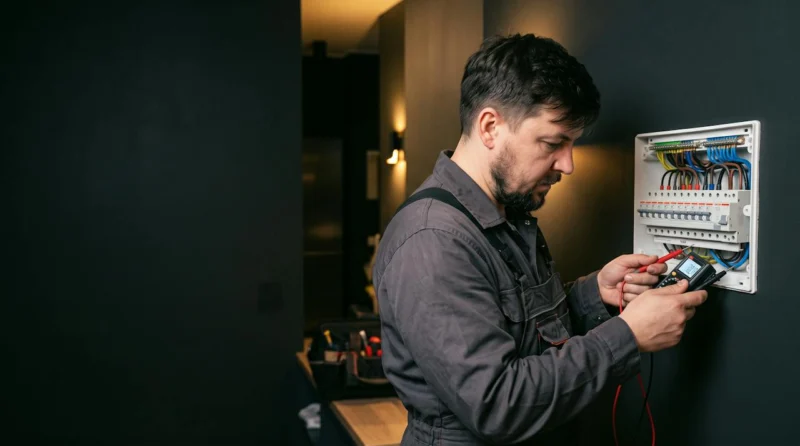
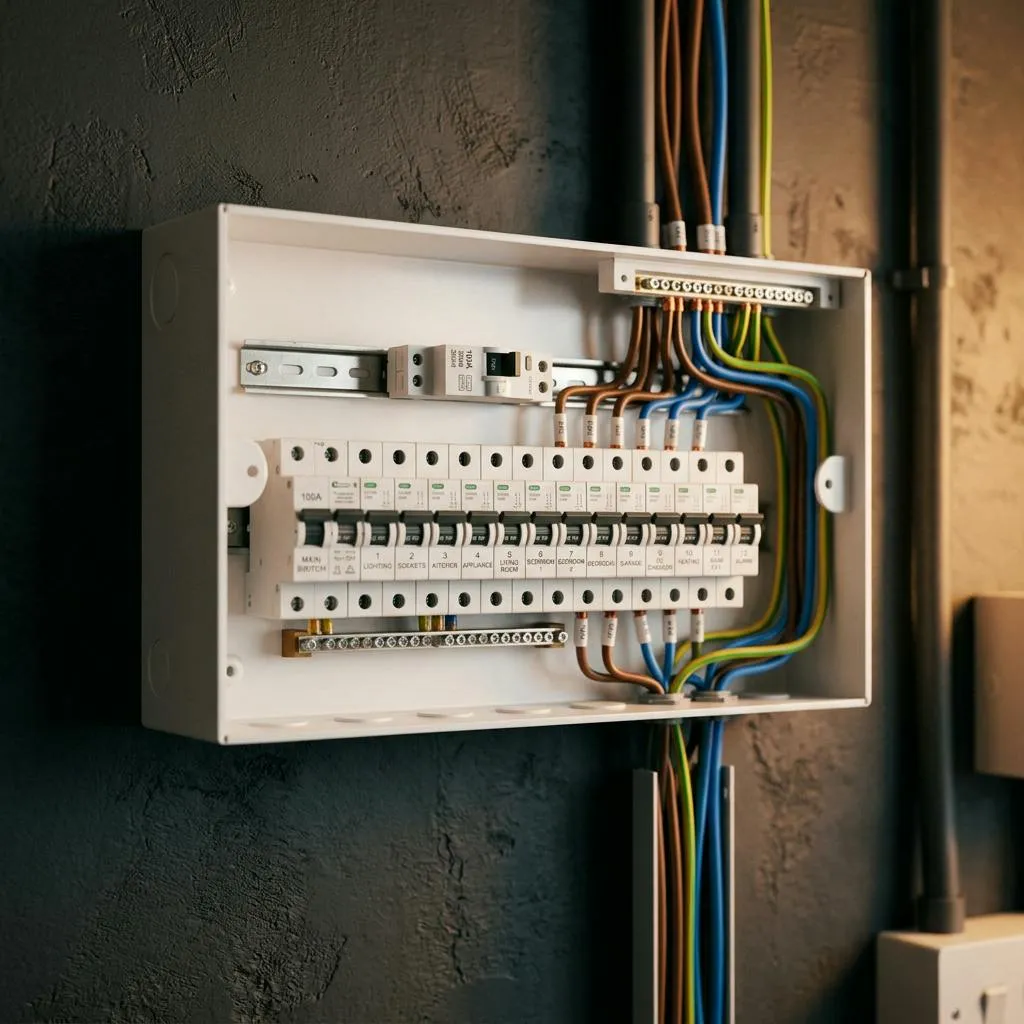
A fuse board upgrade brings several kinds of protection. A main switch isolates the whole installation. An RCD detects current leaking to earth, for example through a person, and disconnects quickly. An RCBO combines that with overcurrent protection on a single circuit, so a fault trips only that circuit, not the whole house. Surge protection devices limit damaging voltage spikes and are now more widely required, so ask whether yours is included. Arc fault detection (AFDD) is worth considering in higher-risk situations.
Warning signs
Signs you need a new fuse box
- Rewireable (ceramic) fuses
- A wooden or cracked plastic consumer unit
- Breakers that trip or fuses that blow regularly
- No RCD protection on socket circuits
- Burning smell, scorch marks or a warm unit
- Planning an extension, EV charger or loft conversion
- A mix of old and new switch types

On the day
What happens on a consumer unit replacement day
Pre-checks
Existing circuits are inspected and tested so problems are known before power goes off.
Power off
The supply is isolated, so expect no electricity while the old board is removed and the new one wired, usually around half a day for a typical home.
Fit and connect
Each circuit is reconnected to its own protective device and labelled.
Test and restore
Every circuit is tested before power returns, with results recorded on the certificate.
Handover
You receive the paperwork and a walk-through of the switches and test buttons.
Faults on old circuits
What if testing finds faults on old circuits?
Old installations often hide problems: damaged insulation, missing earth connections, poor bonding or circuits that do not meet today's standards. Testing finds these before the new board is energised. Minor issues can be corrected on the spot, but serious faults, such as a failed insulation resistance reading, must be repaired before power is restored to that circuit. Where the wiring itself is the cause, a rewire or circuit repair may be the safer next step, and the options are explained before any extra work.
Notification
Part P notification and your paperwork
Consumer unit replacement in London, as anywhere in England, is notifiable under Part P. A registered installer notifies Building Control through their scheme, or the homeowner must apply to the council. Afterwards you should receive an Electrical Installation Certificate and, in time, a Building Regulations compliance certificate. Keep both, because buyers, insurers and letting agents ask for them. See our wider electrical services, and our pricing page for what affects cost.
Before the quote
What an electrician checks before quoting a consumer unit replacement
- Where the meter, supply cut-out and existing board sit, and how easy they are to reach
- The size and condition of the meter tails (the cables between the meter and the board)
- The earthing arrangement of the supply, and whether main bonding to gas and water pipes is in place
- How many circuits there are, and what each one feeds, such as lights, sockets, cooker or shower
- Whether circuits run in old rubber, lead-sheathed or aluminium wiring that testing may flag
- Extra loads you plan to add soon, such as an EV charger, heat pump, induction hob or loft conversion
- Whether the network operator or your supplier needs to be involved, for example if the supply has to be isolated or the cut-out moved
- In a flat, whether the board is shared or part of a communal arrangement that needs the freeholder's consent
Which document
EICR or consumer unit replacement: which do you need, and what does the certificate cover?
These two jobs are often confused. An Electrical Installation Condition Report (EICR) is an inspection of the existing wiring and board. It reports on condition and codes any faults, but it does not fix them. A consumer unit replacement is an alteration, so the electrician issues an Electrical Installation Certificate (EIC), which is a different document. Replacing a consumer unit is notifiable under Part P of the Building Regulations, so you should also receive a Building Regulations compliance certificate from the installer's competent person scheme, or a completion certificate from Building Control if the work was notified to the council. The two are often linked, because an EICR can show that the board should be replaced, and a replacement should come with testing of every circuit.
An EIC records who designed, built and tested the work, the details of the new board, the type of protective devices and the earthing, and a schedule of inspections and test results for each circuit. It is signed by the person responsible, and a copy should be given to the person who ordered the work. It covers the work carried out. It does not certify that the rest of the wiring in the building is in good condition, which is the job of an EICR.
If you want to know what condition the wiring is in before you commit, an EICR first is a sensible step. If you already know the board is old, replacing it with testing, and then dealing with any faults found, often makes the most sense. See electrical fault finding if you have a specific problem.
Landlords
Landlords: electrical safety rules for rented homes in England
The Electrical Safety Standards in the Private Rented Sector and Social Rented Sector (England) Regulations 2020 require landlords to make sure the fixed electrical installation is inspected and tested by a qualified person before a tenancy starts and then at least every five years, or sooner if the report says so. The result is an EICR. A copy must go to existing tenants within 28 days of the inspection, to new tenants before they move in, and to the local council within 7 days if it asks in writing.
Reports code each observation. C1 means danger is present, C2 means potentially dangerous, and FI means further investigation is needed. A report with any of these is unsatisfactory, and the landlord must arrange the remedial work within 28 days, or sooner if the report says so, and then, within 28 days of finishing it, give the tenant and the council written confirmation from a qualified person that the work is done. C3 is a recommendation for improvement and does not make a report unsatisfactory on its own.
Missing RCD protection, for example on bathroom circuits or on sockets that could supply equipment outdoors, can lead to a C2 code, and replacing an old board can clear several codes at once. Keep the EICR, the EIC and any remedial paperwork in your property file, as letting agents and local authorities ask for them. Councils can fine landlords who do not comply. Read about the wider electrical services we offer, or the separate gas safety certificates landlords also need.
Questions
Consumer unit replacement in London: your questions
How long does a consumer unit replacement take?
A typical home is usually done in around half a day, depending on the number of circuits, the condition of the old wiring and access to the meter and cables. Power is off while the work is carried out, so plan for that. Larger or older properties can take longer.
Do I need a metal consumer unit?
Under current BS 7671, consumer units in homes must have an enclosure made of non-combustible material, usually steel, or be housed in a non-combustible cabinet, so a plain plastic board is no longer fitted new. An older plastic unit is not automatically illegal, but it should be assessed and replacement is usually recommended.
What is the difference between an RCD and an RCBO?
An RCD protects against earth leakage across a group of circuits, so a fault can trip several at once. An RCBO combines earth leakage and overcurrent protection on one circuit, so only the faulty circuit loses power. RCBOs make fault finding easier and cause fewer nuisance outages.
Is a fuse box upgrade notifiable under Part P?
Yes. Replacing a consumer unit in a home in England is notifiable work. It must be done by a registered competent person who notifies Building Control through their scheme, or be inspected by the local council. You should receive certificates once the work is tested.
Can I replace my own fuse box?
Replacing a consumer unit is notifiable and involves isolating the supply, safe working near live parts, specialist testing and certification. It is not a suitable DIY job. Use a registered electrician, or apply to Building Control for inspection if the work is done by anyone else.
Will I lose power to the whole house during the work?
Yes, the supply is switched off while the old board is removed and the new one connected and tested. Plan around fridges, freezers, computers and any medical equipment, and tell the electrician beforehand if anyone at home relies on power.
How do I know if my fuse box is out of date?
Rewireable fuses, a wooden or cracked plastic case, a mix of old and new switches or no RCD protection are all signs. A periodic inspection report (EICR) will confirm the condition of the board and the circuits it protects.
Starting prices
Consumer unit (fuse board) replacement: what the price includes
Fuse board replacement from £450
Supply and fitting of a new metal consumer unit with RCD protection, up to 10 ways, in the same position: testing of every circuit, labelling, an Electrical Installation Certificate (EIC) and Building Control notification under Part P.
Popular upgrades
RCBOs on every circuit, surge protection, a new main earth and bonding, and a larger board for extra circuits.
What costs extra
Faults found on the circuits during testing, moving the board, a new meter tail or main earth, and rewiring. Each one is itemised in your written quote. All starting prices include VAT.
Need help today?
Urgent repairs in London
Call-outs seven days a week at the published hourly rate. These pages explain what to do first and what the visit costs.

Why Plumbery
Qualified, insured and upfront about price
Every engineer we send is registered or qualified for the trade they work in, and you can check the details before anyone starts.
- Fully insuredEvery job is covered by our insurance.
- Rates published in advanceOur hourly rates are on the pricing page. Nothing starts until you agree the rate.
- Paperwork includedGas safety certificates and electrical records are provided on completion.
- Registered companyPlumbery Ltd, company no. 11677583, registered in England and Wales.
 All electrical services
 General electrical installations and rewiring
 Electrical faults finding
 Switches, sockets and transformers installation
 Dimmer switches and modules replacement
 Doorbell installation and repair
 Lighting fixture installation